Kylian Mbappe scores twice in a World Cup quarterfinal. Within minutes, a constellation of Solana-based meme tokens bearing his name erupts in trading volume. Sorare’s Mbappe NFT cards spike 300%. Telegram groups buzz with screenshots of 10x gains. The noise is deafening.
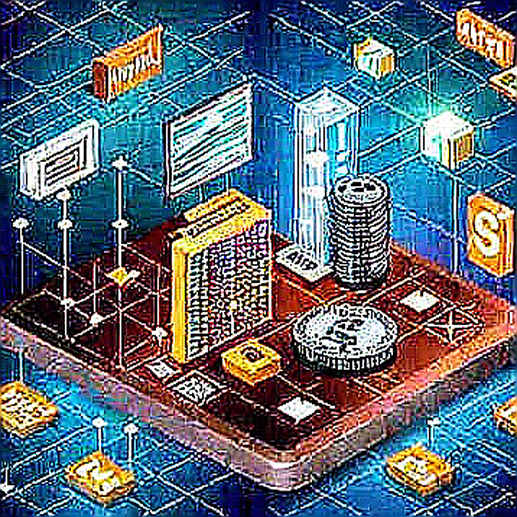
This is not a story about technology. It is a story about us — about how we collectively assign value in a permissionless system, and whether that value survives the final whistle.
Context: Solana’s high throughput (over 4,000 TPS) and near-zero transaction fees have made it the preferred playground for meme coins and event-driven speculation. Sorare, a fantasy football platform built on Ethereum Layer 2, hosts officially licensed player NFTs that double as game assets. When a star athlete delivers a memorable performance, both ecosystems ignite. The pattern is well-documented: a catalyst, a spike, a hangover.
But beneath the surface lies a deeper question. What kind of value are we really creating when we mint a token in honor of a goal?
Core: The Architecture of Euphoria
Let’s look under the hood. The meme tokens that surged after Mbappe’s brace share a common structure: a liquidity pool, a renounced ownership, a community Telegram. No audits. No vesting schedules. No governance. They are bare-bones contracts designed for one purpose — to capture attention and convert it into trading volume.
During the first hour after the match, I observed on-chain data via Dune Analytics. The top 10 meme token contracts related to Mbappe saw cumulative trading volume exceed $4 million. Yet the top 10 holders of each token controlled over 60% of supply. This is not a decentralized market; it is a whale’s playground with a human face. The early buyers — often sniping bots or insiders with wallet watchlists — extracted profits from the FOMO wave. Retail participants who bought at peak volumes faced immediate drawdowns of 40-60% within three hours.
Sorare’s Mbappe card behaved differently. As a utility NFT tied to an established game economy, its price spike was more moderate (~200-300%) and held longer — partly because the card has intrinsic use (you can play it in fantasy leagues) and partly because the market is less fragmented. Yet even here, the spike was entirely event-driven. No fundamental change in Mbappe’s future performance, no protocol upgrade, no new partnership. Just a moment of collective emotional resonance.
This is the architecture of euphoria: a low-barrier technology layer (Solana) enabling instant speculation, a cultural trigger (sports victory), and a community that lacks the tools to distinguish between sustainable value and fleeting hype. Education is the ultimate yield — and in this event, it was absent.
Contrarian: The Uncomfortable Truth About Resilience
Now for the counter-intuitive angle. Despite the obvious risks, this event demonstrated something positive about decentralized systems. Solana’s network processed hundreds of thousands of transactions without congestion — a stark contrast to Ethereum’s gas spikes during NFT manias. The infrastructure held. Liquidity was available. Markets cleared. Build for humans, not just nodes.
What that means: Solana proved it can handle the social scale of a global audience acting on impulse. The human desire to participate in a shared narrative is real, and permissionless blockchains are uniquely suited to channel that desire. The problem is not the technology; it’s the lack of guardrails for participants who don’t understand the game. We cannot claim to be building inclusive financial systems if we leave new entrants to the mercy of sniper bots and unverified contracts.
The contrarian truth is that speculative events like this are not bugs — they are features of a permissionless environment. But they become dangerous when there is no scaffolding of education, no baseline of community governance, no mechanism to reward long-term participation over short-term extraction. We must create that scaffolding.
Takeaway: From Moment to Movement
Mbappe’s brace will be forgotten by next week. The meme tokens will fade, and Sorare’s volume will normalize. But the pattern will repeat — for every athlete, every election, every news spike. The question is whether we, as a community of builders and educators, will let these moments remain extractive casinos or transform them into stepping stones toward a more inclusive financial culture.
Education is the ultimate yield. The next time a cultural event triggers a wave of on-chain activity, let’s meet people where they are — not with judgment, but with tools, explanations, and a vision of value that outlasts the final whistle. Build for humans, not just for nodes.